Massachusetts Infrared (Thermal) Imaging
SEE WHAT'S REALLY GOING ON

massachusetts thermal imaging
Level One Thermographer

David Valley
978-683-4984
866-705-3100


HOME
WHAT IS THERMOGRAPHY
INFRARED APPLICATIONS
WHY HIRE ME
AREAS I SERVE
SAMPLE INFRARED REPORT
INFRARED SCAN PRICING
VIDEOS
IMAGE GALLERY 1
IMAGE GALLERY 2
IMAGE GALLERY 3
ENHANCING IR INSPECTION
INFRARED GLOSSARY
REQUEST AN INSPECTION
FAQ's
NEWS APPEARANCES
TESTIMONIALS
RESOURCES
MY PARTNERS
SEARCH MY SITE
CONTACT ME

> Insulation Defects
> Energy Efficiency Inspection
> Moisture Intrusion
> Ice Dams
> Pipe Leaks
> Roof Leaks
> Electrical Issues
> HVAC Fault Detection
> Foundation Issues
> Radiant Heating
> Wood Boring Insects
> Structural Issues
> Flat Roof Leak Detection
> Radiant Ice Melt Systems


Massachusetts infrared inspection, Massachusetts thermal imaging, mass. infrared, ma. infrared, massachusetts energy efficiency inspection, infrared, thermal imaging in Massachusetts, ir inspections massachusetts


ICE DAMS

excessive ice dam

Ice dams in Massachusetts are an ongoing nuisance and are causing extensive damage to soffit cavities, fascia boards, roof sheathing, gutters, and to the most outer portion of living area walls. This ice build-up can absolutely be alleviated, but every house tends to have a different situation as to why this ice dam is there in the first place.

First, I'd like to explain how this massive ice mound forms on the most outer edge of your roof...


HOW ICE DAMS OCCUR

It snows and your roof surface will continue to accumulate this falling snow and the temperature (outside) of your home drops to below freezing.

1.) The temperature inside your attic is above freezing (warmer), due to the heated living area (below the attic) allowing heat to infiltrate the attic cavity, thus raising the temperature of your roofing material to above freezing.

2.) Because of the temperature differential and the warmer roofing material, the snow on top of the roof starts to slowly melt and gravity takes over. The melted snow (now water) starts to cascade down the roof (underneath all the accumulated snow) in an attempt to drain off the roof or into your gutters.

3.) As soon as the water reaches the outer edge of the roof (where the outer roof edge will not be as warm as the attic cavity) it gets exposed to the freezing air. The cascading water now freezes into an ice mound (that literally clings to your roofing material) along the edges of your roof and the gutters (if applicable).

4.) As more and more melted snow (water) continues to cascade down your roof, it continues to freeze behind and on top of the previously frozen run off, forming a much larger ice dam. Once this ice dam takes shape, it will literally trap any water that is attempting to drain down and off the roof. Now, all the melting water is dammed and has nowhere to drain to, so it builds up. This accumulating water is simply backing up and is forced right under your roofing material and into your attic or soffit cavity (and then gravity takes over once again), and this water infiltration simply drips down into your living area wall cavities, causing the nuisance staining and damage that may be observing throughout your walls.


ice dam at edge of roof


When the heavy snow on your roof field becomes excessively uneven, this is indicative of heat infiltrating your attic and melting the snow on your roof, in turn causing ice dams.

roof ice dam at edge of roof

Preventing this ice from forming on the edge of your roof in the first place is absolutely preventable. Many homeowners are continuously researching articles on “HOW TO PREVENT ICE DAMS” and they learn that proper insulation and ventilation is necessary to prevent these ice dams. That’s fine, but after most homeowners obtain their education on “HOW TO PREVENT ICE DAMS” they may attempt to correct their ice dam situation, but are still baffled and are unable to figure out exactly where any improvement is needed. That’s why they call me in to access their situation.


thick ice dam at roof edge

Your solution to alleviate your ice dam issues is the use of Infrared technology. My infrared inspection is a brilliant method of providing you with an instant snapshot of any active heat loss through the most outer portion of your walls and ceilings of your home. Deficient insulation is a poor insulator, which allows it to now become a great conductor of your conditioned air, and this is what enables me to easily detect the inefficient insulation applications throughout your home. Infrared imaging will visually show thermal mapping of any improperly insulated ceiling and wall cavities that are causing the ice dams at the outer roof edges of your building.


Take a look at the images below and see how easy Infrared detects uninsulated/problematic cavities where ice dams were occurring...


infrared line

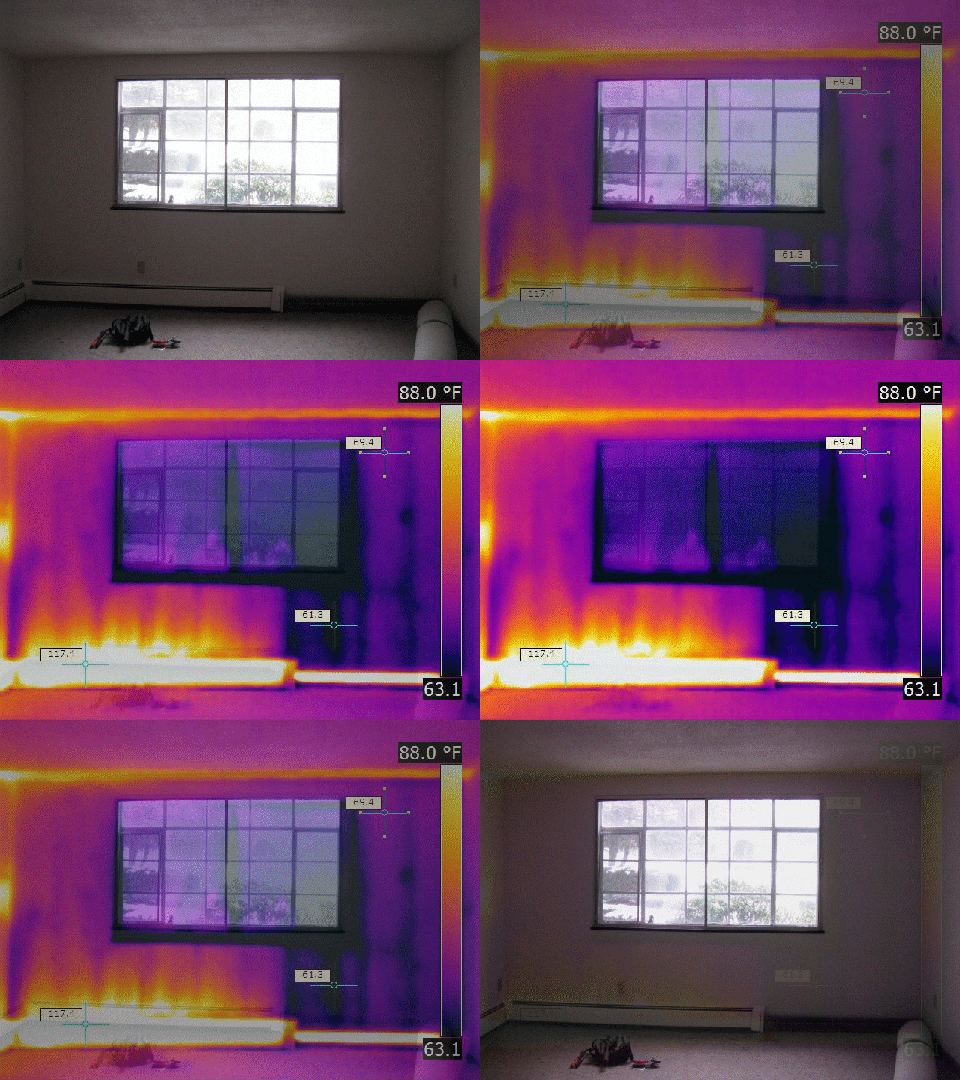
Infrared clearly detects cold air (blue color) infiltrating the living area

infrared detects moisture from ice dam


infrared line

Infrared detects missing insulation at all outer ceiling cavities

insulation missing causes ice dam


infrared line

Thermal imaging detects cold spots from improperly installed soffit vents

conducive conditions for ice dams


infrared line

Infrared detects insulation issues above this bathroom ceiling.

excessive insulation voids


ICE DAM IMAGES COMBINED WITH MICE ACTIVITY IN THE ATTIC

The brown ice clinging to this particular siding is caused from ice dams at the eave area combined with excessive mice activity in the attic. The brown color of mice excrement mixes in with the ice accumulation (at the eave area) and when this ice starts to melt, the brown mess will seep out from the eave area and behind the siding material.

ice dam brown

Note how this brown mess will follow the contour of the building.

brown ice on siding


You can see how this brown ice seeps out from behind the clapboard siding.

brown ice dam


This church had ice dams with signs of mice activity below the belfry.

brown ice

brown icing


Home Inspection Web Site desi gn and hosting by Grassfrog Technologies, LLC. Copyright © 2008, all rights reserved.